



SAEM Clinical Image Series: Eye Trauma and Vision Loss
The patient is a 44-year-old male with a past history of end stage renal disease on hemodialysis, diabetes, and hypertension who presents with acute visual loss after assault 2 hours prior. He was struck in the eye by his partner’s fist (adorned with a large ring), but denies severe pain. He does endorses instant difficulty with his vision. There is no use of contacts or glasses. No other injuries, headache, or loss of consciousness are reported. [+]
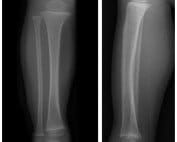
SplintER Series: A Toddler’s Missed Step
A mother and father bring their 2-year-old boy to the Emergency Department after the child tripped over the family dog while running across the living room after a ball. He will not walk and points at his right lower leg and says it hurts (photo credit). [+]

Matthew Negaard, MD
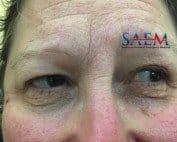
SAEM Clinical Image Series: Double Vision
Chief complaint: Double vision History of Present Illness: 61 year old female with history of HTN, DM, hyperlipidemia, and chronic low back pain presenting with double vision. She received an epidural spinal injection yesterday for the 4th time for low back pain. She was sedated for the procedure and woke up with headache, neck stiffness, and left eye “jumping around,” which progressed to double vision 1 hour later. There was no blurry or double vision with either eye closed. She had 1 episode of emesis. She presented to the ED 24 hours later [+]

SAEM Clinical Image Series: Bumps and Balls
A 31 year old African-American male, with a history of HIV, non-compliant with medications, presents with 3 months of painful “balls and bumps” on his left thigh. He was evaluated at another hospital prior to this visit and was discharged with 7 days of TMP-SMX. He denies any fever, chills, weight loss, night sweats, or anorexia. [+]

Anwar Ferdinand, MD

EM Match Advice: How to “Swipe Right” this Interview Season
Applying for residency programs has often been compared to the modern world of dating. So in this 26th installment of the EM Match Advice series, we discuss finding the right-fit program for applicants using modern dating terminology. Join us in this fun and informative episode in navigating the residency match process. Podcast Episode A high-stakes component in a medical student's application for an emergency medicine (EM) residency is the Standard Letter of Evaluation, or SLOE. This is a standardized templated letter, written by an group (e.g. department) or faculty from an EM-residency program. This episode of EM Match Advice gives [+]
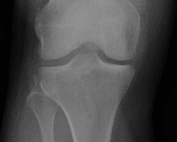
SplintER Series: A Case of Knee Pain
A 45-year-old male presents with right knee pain after he pivoted and felt a “pop” while making a move playing pickup basketball. You obtain knee x-rays and see a lateral irregularity in the AP view (photo courtesy of Dr. Gerry Gardner at Radiopaedia.org). What is the most likely diagnosis, commonly associated injury, and appropriate management plan? [+]

Alex Wertheimer, MD
Procedural Sedation Guide
Mastering procedural sedation can make your shifts safer, more efficient, and more comfortable for your patients. But what defines a sedation? What and who do I need? Does my patient need to be fasting? How should I choose and dose my medications? Below is a brief guide to help you be more confident in your definitions, preparation, and medications. Included is a guide card you can print out and clip behind your badge! Read on and be a pro for your next on-shift sedation. [+]
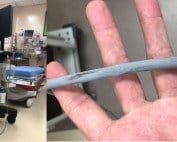
Trick of the Trade: Save the Ultrasound Probe Cable
You need to perform an ultrasound on your patient. You walk up to the ultrasound and upon grabbing the machine, you notice it’s stuck! You look down and realize the ultrasound probe cable (particularly the linear probe) is impeding the wheel from rolling. You push the machine back, pick the cable up off the floor and off you go to scan to find that the probe is not working. As you try to figure out why it’s not working, you realize that the cable is exposed after repeated damage from the countless times the wheels on the machine rolled over [+]
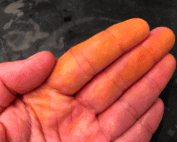
ACMT Toxicology Visual Pearls: Getting Caught Yellow-handed
Which bodybuilding supplement is associated with hyperthermia and this clinical image? 2,4-dinitrophenol (DNP) Beta-carotene Caffeine Creatine Dimethyl amylamine (DMAA) [+]

Francisco Javier Andrade Jr., MD
Carolinas Medical Center
Charlotte, NC
Latest posts by Francisco Javier Andrade Jr., MD (see all)
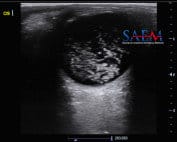
SAEM Clinical Image Series: Seeing Stars
[Click for larger view] Chief complaint: Left eye pain, redness, and foreign body sensation History of Present Illness: 39 year old man presents after metal grinding without protective eyewear three days prior. He had felt something strike his left eye. He developed “burning” pain, tearing, and redness. Pain worsens with extraocular movements. He notes that vision in his right eye has always been worse than the left. Denies any other visual complaints. [+]