



The Leader’s Library | Radical Candor: Be a Kick-Ass Boss Without Losing Your Humanity
We proudly announce the second installment of ALiEM’s career development book club, The Leader’s Library, with Kim Scott’s bestseller Radical Candor [Amazon link]. Your colleague and friend plops down next to you at a meeting. She’s extra excited because she’s going to give an important presentation to hospital administration about her new quality improvement project, and beams a bright smile at you. She has a huge chunk of spinach between her teeth. What do you do? You could shout, “Hey, loser, get that spinach outta your teeth!” in front of the whole group… or you could encourage her to go ahead and [+]

ALiEM AIR | Procedures 2019 Module
Welcome to the AIR Procedures Module! After carefully reviewing all relevant posts from the top 50 sites of the Social Media Index, the ALiEM AIR Team is proud to present the highest quality online content related to emergency procedures. 10 blog posts within the past 12 months (as of April 2019) met our standard of online excellence and were curated and approved for residency training by the AIR Series Board. We identified 1 AIR and 9 Honorable Mentions. We recommend programs give 5 hours (about 30 minutes per article) of III credit for this module. [+]
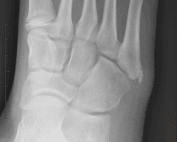
SplintER Series: Ankle and Foot Pain in a Child
A 10-year-old female dancer presents with sub-acute onset pain located in her lateral ankle and foot without any history of significant trauma. She has had similar pain occasionally over the past 6 months. Pain is worse while dancing and now has difficulty putting on her shoe. You obtain a foot x-ray and see the adjacent image (photo credit). What is the most likely diagnosis, differential diagnosis, and appropriate management plan? [+]
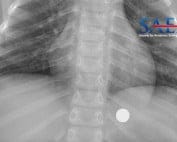
SAEM Clinical Image Series: Foreign Body Ingestion
[Click for larger view] Chief complaint: Foreign Body Ingestion History of Present Illness: A 4-year-old male presents to the Pediatric ED for evaluation of swallowed foreign body. The mother reports the patient was at his grandmother’s house playing near a cabinet when they witnessed him put a small unknown object in his mouth and swallow. Family denies vomiting, difficulty breathing, change in behavior, abdominal pain, or any additional symptoms at this time. [+]
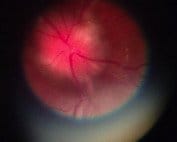
SAEM Clinical Image Series: Young Woman with a Headache
[Click for larger view] Chief complaint: Headaches for 1 year History of Present Illness: A 31-year-old woman with no significant past history presents with a dull headache. She notes the headache is generalized, has been almost daily for a year and is worsened by bending over. She denies nausea, vomiting, photophobia, trauma, seizures, focal weakness, numbness, or vision change. Acetaminophen and ibuprofen provide only mild, short-acting relief. She takes oral birth control and her periods have been normal. [+]
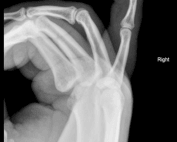
SplintER Series: Funny Looking Finger
Figure 1: Terminal extensor tendon avulsion at distal interphalangeal joint of 5th digit A 17-year-old baseball player presents complaining of finger pain and difficulty straightening his finger after a baseball game. You obtain x-rays and see the following fracture (photo credit). What is your diagnosis and emergency department management? [+]
![Sergio Alvarez, MD [+]</p></body></html>](https://www.aliem.com/wp-content/uploads/2026/01/Sergio-Alvarez-2025.jpg)

Differentiating pericardial effusion from pericardial tamponade on ultrasound
Tamponade physiology, in which a pericardial effusion impedes cardiac output, is a medical emergency and requires prompt diagnosis and intervention before cardiovascular collapse ensues. However, not every fluid collection in the pericardial sac results in tamponade physiology. A clinical diagnosis of tamponade (Beck’s triad) has poor sensitivity and will occur only in the late stages of tamponade.1 In order to know whether or not an intervention is necessary for the setting of pericardial effusion, ultrasound diagnosis of tamponade is paramount. [+]

Ultrasound for the Win! 18M with dysphagia #US4TW
Welcome to another ultrasound-based case, part of the “Ultrasound For The Win!” (#US4TW) Case Series. In this case series, we focus on a real clinical case where bedside ultrasound changed the management or aided in the diagnosis. In this case, an 18-year-old man presents with a sore throat. [+]

Kelly Goodsell, MD
PEM Pearls: 5 Tips to Demystify Amoxicillin in Pediatric Infections
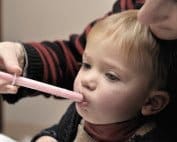
Amoxicillin is a penicillin derivative antibiotic against susceptible gram positive and gram negative bacteria. It has reasonable coverage for most upper respiratory infections and is used as prophylaxis for asplenia and bacterial endocarditis. This post aims to demystify amoxicillin treatment for common pediatric infections. [+]

Rosy Hao, MD
SUNY Downstate and Kings County Medical Center
Fascia iliaca nerve block: A hip fracture best-practice
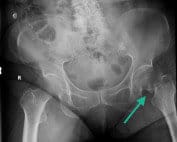
An 82-year-old woman presents with left hip pain after a mechanical fall while cleaning the kitchen floor. When EMS arrived, the left leg was foreshortened and externally rotated. The paramedics administered 10 mg of IV morphine, but she is still writhing in pain on arrival. The AP pelvic x-ray demonstrates a left femoral neck fracture (arrow). You consider performing a fascia iliaca nerve block for better pain control. [+]