



ALiEM AIR | Orthopedics Lower Extremity 2019 Module
Welcome to the AIR Orthopedics Lower Extremity Module! After carefully reviewing all relevant posts from the top 50 sites of the Social Media Index, the ALiEM AIR Team is proud to present the highest quality online content related to orthopedic lower extremity emergencies. 5 blog posts within the past 12 months (as of July 2019) met our standard of online excellence and were curated and approved for residency training by the AIR Series Board. We identified 1 AIR and 4 Honorable Mentions. We recommend programs give 2.5 hours (about 30 minutes per article) of III credit for this module. [+]
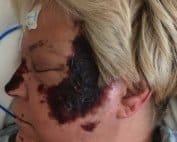
SAEM Clinical Image Series: Facial Burn
A 50-year-old female with a history of bipolar disorder, ADHD, anxiety, depression, and alcoholism presented to the ED after her family found her at home agitated, restless, and with a “large black burn” on her face. Her husband reported that she had been “picking” at this area of her face earlier in the day; at that time it appeared only slightly red. Per her husband, the patient had also felt “bugs crawling on her legs” and had been picking at and grabbing her legs on the day of presentation. [+]

TLDR Book Review: Deep Work – Rules for Focused Success in a Distracted World
Do you struggle when you try to focus on one task for a prolonged period? When you’re reading or writing a paper, are you frequently tempted by social media, a click-bait HuffPo article, or what the latest Instagram celebrities have been doing? Most of us are not used to spending large periods of time doing deep work. Like any skill, the ability to focus is something that we have to develop and train. This book, Deep Work, by Cal Newport will explain why it is so critical to develop our ability to focus deeply, and how to do it. [+]
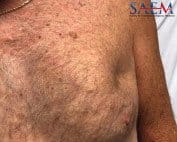
SAEM Clinical Image Series: Chest Wall Mass
A 71 year-old patient with a past medical history of hypertension, percutaneous transluminal coronary angioplasty 7 years ago, and robotic coronary artery bypass grafting of the left internal mammary artery to the left anterior descending artery 9 years ago presents with worsening dyspnea on exertion. He had a biopsy of the upper lobe of the left lung the week before. He was having a neoplastic mass evaluated. The patient presents with a soft left-sided anterior chest mass, inflating and deflating with respiration. [+]

SAEM Clinical Image Series: Mysterious Blood Sample
34-year-old female with a history of hypertension, diabetes mellitus, and pancreatitis presents for epigastric and left upper quadrant abdominal pain. Her symptoms started yesterday evening and have been worsening since onset. She reports chronic epigastric pain that waxes and wanes for several years since her first episode of pancreatitis in 2014. Yesterday she had an abrupt onset of nausea that accompanied the pain without emesis. The pain worsened and is now currently 10/10 in severity. She describes it as severe and deep. She has no bloody or dark stool. She denies any heavy alcohol use, [+]

Guideline Review: 2018 IDSA Update on Influenza (Infographic)
Did you get your flu shot? We hope so. Influenza season is upon us again and it is always helpful to review the latest 2018 Infectious Disease Society of America (IDSA) update on the diagnosis and treatment of influenza.1 Notable is that influenza-confirmed patients who present within 2 days of symptoms who are deemed low risk do not automatically warrant antiviral treatment. The subsequent question then is who is high risk? The following infographic by our Guidelines Editor, Dr. Kelly Wong, summarizes the key take-home points for emergency medicine clinicians. [+]
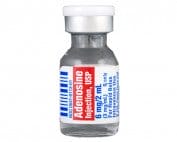
Trick of the Trade: Combine Adenosine with the Flush
2019 literature update from this original 2012 Trick of the Trade post! The success of adenosine depends as much on the administration technique as it does the mechanism of action. The 2010 Advanced Cardiac Life Support (ACLS) Guidelines recommend the following when administering adenosine: “6 mg IV as a rapid IV push followed by a 20 mL saline flush; repeat if required as 12 mg IV push” This recommendation remained in the 2015 iteration. While most drugs are metabolized in the liver, adenosine doesn’t even make it that far, being metabolized in the erythrocytes and vascular endothelial cells. [+]
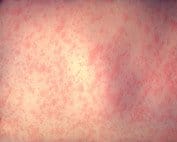
Measles 2019 Updates: The Comeback Kid
The child with a fever and rash in your Emergency Department (ED) may actually have measles. This year, there have been 1,182 cases of measles in the U.S., and counting. This is the highest rate in the past 27 years [1]. Globally, measles kills over a hundred thousand children [2]. In the U.S., one child dies for about every 1,000 cases [3]. Emergency providers must be able to quickly detect short-term complications that can lead to death and distinguish measles from mimics like Kawasaki Disease. It’s no coincidence that this year’s outbreak is in the setting of lower vaccination rates. [+]

2019-20 ALiEM Deputy Editor in Chief, Dr. Luz Silverio
With 1000+ posts over 10 years, we are thrilled to add 1 superstar to the ALiEM blog team. We officially announce Dr. Luz Silverio as our new Deputy Editor in Chief to help shape the direction and educational content of the blog. She graduated from the UCSF-SFGH Emergency Medicine Residency program, is an emergency physician at Kaiser Permanente at Santa Clara and a clinical assistant professor (affiliate) at Stanford University, hosts her own infrequently edited blog, Silverio Lining, has been a guest podcaster for EM:RAP and ERCast, serves as an Orthopedics Editor for DynaMed, and has had her watercolor artwork [+]
Pediatric Physical Examination: Tips & Techniques
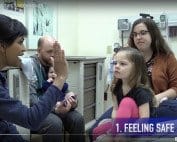
In pediatrics, the history and physical examination is paramount. But even the most seasoned professional can have a challenge when facing a wiley 2-year-old. What strategies can you use to get in, get out, get the information you need, and maybe even make a (very small) friend in the meantime? [+]

Aditi Mitra, MD
University of Michigan