



Beyond the Abstract | Resident Motivations and Experiences in Listening to Educational Podcasts
Podcasts are all the rage these days, and it is not surprising that some residents spend more time with podcasts than any other educational resource.1–3 But why? And how do podcasts fit with other forms of learning, like lectures, textbooks, and clinical teaching? In our recent article published in Academic Medicine, we explored these questions. Using qualitative interviews and analysis, we identified 3 overarching themes that shed light on residents’ podcast listening behaviors and the tensions with which listeners wrestled.4 [+]
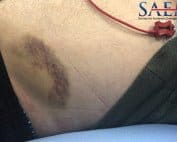
SAEM Clinical Image Series: A Page Turner
[Click for larger view] Chief complaint: Abdominal pain History of Present Illness: A 36-year-old male with a history of alcohol abuse, hypertension, hyperlipidemia, and myocardial infarction with a subsequent stent on ticagrelor and aspirin presents with abdominal pain. He reports 3 days of epigastric and periumbilical pain and multiple episodes of non-bloody, non-bilious emesis. He denies fever, diarrhea, blood in his stool, and urinary symptoms. He endorses bruising to his bilateral flanks and multiple falls recently while drinking. [+]
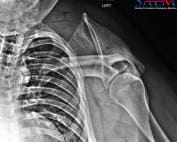
SAEM Clinical Image Series: Left Shoulder Pain
[Click for larger view] Chief complaint: Arm pain History of Present Illness: A 30-year-old obese male presents to the ED after a ground level fall onto his left arm with immediate isolated left shoulder pain. He did not lose consciousness and denies dyspnea, numbness, weakness, vomiting, and chest pain. [+]

Sean Murray, MD
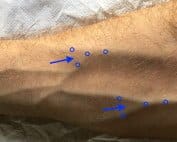
Techniques for Ultrasound-Guided IV Placement
Imagine a busy evening shift interrupted by the news that the unstable dialysis patient still has no access. Begrudgingly, you drag the ultrasound into the patient’s room. Buried beneath a layer of muscle, a tiny vein lurks below an intimidating artery with a nerve nestled close by. Making matters worse, the patient is becoming increasingly more frustrated. “This always happens. I told them not to remove my last PICC line,” he notes. The use of ultrasound-guided IV improves successful cannulation and decreases complications, but cases like this have caused many emergency providers to resent, even fear, this basic procedure.1–4 Below, [+]

National Physician Suicide Awareness Day 2019
To address the growing issue of physician suicide, the Council of Emergency Medicine Residency Directors (CORD), in collaboration with AAEM, ACEP, ACOEP, EMRA, RSA, RSO and SAEM, annually join forces to help highlight the issues and drive change. At ALiEM Wellness Think Tank, we tackle resident issues such as preventing suicide and burnout, enhancing resilience, and promoting overall quality of life. Suicide is an important topic that affects our physicians and the future of our specialty. We advocate a culture of support, transparency and openness. If you, or someone you know is exhibiting signs of depression or suicidal ideation, please [+]
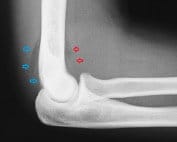
EMRad: Can’t Miss Elbow Injuries
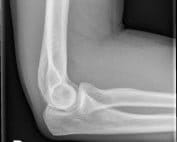
Have you ever been working a shift at 3 am and wondered, “Am I missing something? I’ll just splint and instruct the patient to follow up with their PCP in 1 week.” This is a reasonable approach, especially if you’re concerned there could be a fracture. But we can do better. Enter the “Can’t Miss” series: a series organized by body part that will help identify injuries that ideally should not be missed. This list is not meant to be comprehensive review of each body part, but rather to highlight and improve your sensitivity for these potentially catastrophic injuries. To begin: “Can’t [+]
EMRad: Radiologic Approach to the Traumatic Elbow
Radiology teaching during medical school is variable, ranging from informal teaching to required clerkships.1 Many of us likely received an approach to a chest x-ray, but approaches to other studies may or may not have not been taught. We can do better! Enter EMRad, a series aimed at providing approaches and improving interpretation of commonly ordered radiology studies in the emergency department. When applicable, it will provide pertinent measurements specific to management, and offer a framework for when to get an additional view, if appropriate. To begin: the elbow. [+]
Peering into Peer Review: How can you participate in peer review?
As part of the ALiEM Faculty Incubator Program, Dr. Anthony Artino, Deputy Editor of the Journal of Graduate Medical Education (JGME) and Assistant Editor for Academic Medicine participated in a Google Hangout with Drs. Antonia Quinn and Teresa Chan where he provided expert insights into the peer review process. His advice and best practices are summarized below. In this interview, the discussion provides an insider perspective to the peer review process and peer reviewer development. This post is the first half of a longer interview with Dr. Artino with the second half discussing addressing peer review comments. [+]
Building Equipment Kits for Streamlined Care
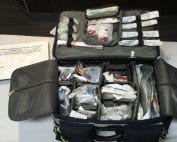
In the setting of emergent care, the ability to access equipment rapidly and reliably can be a deciding factor in patient outcome. Poor stocking, inconsistent organization, and dispersal of equipment throughout a large geographic area are realities of practice as well as barriers to rapid and effective patient care. Equipment kits are a great way to ensure rapid access to a select set of tools to deal with emergent scenarios. They result in both decreased time to arrival and decreased time to successful completion of procedure.1,2 Scenarios that can benefit from organized and well provisioned kits include central or peripheral [+]
SAEM Clinical Image Series: Hip Pain
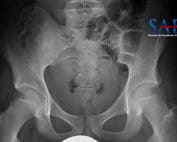
[Click for larger view] Chief complaint: Left hip pain History of Present Illness: A healthy right leg-dominant 13-year-old male athlete presents with left hip pain after kicking a soccer ball. He states that he kicked the ball awkwardly and experienced hip pain immediately afterwards. He did not feel a pop or cracking sensation but could not stand after the kick and fell to the ground. He can ambulate but only with significant pain. He now has 8/10 sharp, non-radiating left hip pain that is worse with movement, weight-bearing and palpation. [+]