



EM Match Advice: Deep Dive into the SLOE
A high-stakes component in a medical student's application for an emergency medicine (EM) residency is the Standard Letter of Evaluation, or SLOE. This is a standardized templated letter, written by an group (e.g. department) or faculty from an EM-residency program. This episode of EM Match Advice gives a behind-the-scenes peek into what letter writers are thinking and a deeper dive into the mechanics of the SLOE. Panelists Dr. Abra Fant (Northwestern University) Dr. David Gordon (Duke University) Dr. Michael Takacs (University of Iowa) Listen to all the episodes of the EM Match Advice Series Resources FAQ on SLOE for medical [+]

Ultrasound for the Win! 3-year-old with abdominal pain #US4TW
A 3-year-old Hispanic female with no significant past medical or surgical history presents to the Emergency Department with her mother for a 3 day history of crampy abdominal pain, intermittent bloody diarrhea and fever. There has been no recent travel, admissions, or antibiotic use. Her older sister reports similar symptoms, which have resolved. The patient saw her pediatrician the day prior, who recommended supportive care including oral rehydration. [+]
![Ryan [+]</p></body></html>](https://www.aliem.com/wp-content/uploads/2019/09/Gibbons-Headshot.jpg)

SAEM Clinical Image Series: Rash and Headache in Acute Myeloid Leukemia
A 25 year old male with a history of acute myeloid leukemia (AML) after an allogeneic stem cell transplant, which has been in remission for 6 years. He presents with a headache and rash. 4 days ago the patient noticed a rash on the abdomen that was itchy, but not painful. Today, he noticed a similar rash on his face. The headache started yesterday, waking him up from sleep. It is now slowly getting worse. He endorses chills, nausea, neck stiffness, neck pain, myalgias, and photophobia. He denies fevers, vomiting and phonophobia. He does have [+]

Making Heads or Tails of the Flipped Classroom: Tips and Tricks for Students
Now more than ever, medical educators are excited about the flipped classroom, defined by Bishop and Verleger as “a new pedagogical method, which employs asynchronous video lectures and practice problems as homework, and active, group-based problem-solving activities in the classroom” [1]. The premise is that students will learn basic concepts during self-study, at their own pace, and come to the classroom ready to dive into small groups and problem-based application [2]. This approach may be unfamiliar and you may find yourself asking: Why should I care? and How do I get the most out of it? Let’s begin with the first [+]
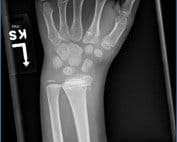
SplintER Series: Salter-Harris Fractures
A 6 year-old boy presents with left wrist pain after he fell off the monkey bars onto an outstretched hand. You obtain wrist x-rays and see an abnormality. What is the most likely diagnosis, differential diagnosis, and management plan? [+]

Mark Hopkins, MD
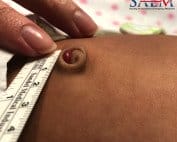
SAEM Clinical Image Series: Bellybutton Mass
A 4 week-old female infant presents due to yellow discharge from her umbilicus and mom noticing a red mass coming from the umbilical area after changing her diaper today. She is a healthy infant born at 40 weeks by vaginal delivery without complications and weighed 6 lbs 1 oz at birth. She is feeding 4 oz of formula every 3-4 hours. She received immunizations at birth and has an established pediatrician. [+]

Is Digital Attendance Enough?
Many medical schools have responded to student requests and begun to record and stream didactic lectures. Students report watching these lectures can be more convenient and allow them to personalize the time, location, and speed to their specific needs. Meanwhile, faculty are freed up from giving the same Powerpoint lecture every semester and schools can highlight their “digital presence.” It seems to be a win on all sides, except when you look at the outcomes. [+]
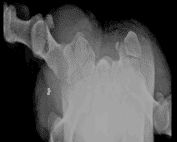
SplintER Series: Pain in the Palm
A 17 year-old left hand dominant high school baseball player presents with severe, sharp pain in his right hand at the hypothenar eminence with associated numbness and tingling of his 4th and 5th digits. The pain and tingling began after he swung his bat and hit a ground ball. You obtain x-rays and see an abnormality. What is the most likely diagnosis, differential diagnosis, and management plan? [+]

The Leader’s Library: Radical Candor | Curated Summary of the Discussion
Welcome back to The Leader’s Library! In our second installment, throughout the week of October 14, 2019, a group of selected learners across the globe tackled Radical Candor by Kim Scott [ALiEM book summary], and generated another fascinating asynchronous dialogue on Slack. This go-round, we had 3 days of discussion with days for reflection in between. Below are the main points that emerged from our robust conversation. [+]
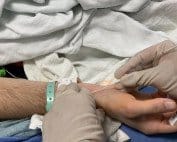
Just-in-Time Training for Emergency Medicine Radial Arterial Line Placement
A 63-year-old male presents for acute onset of headache, neck pain, and altered mental status. He has a prior history of hypertension and hyperlipidemia but recently lost his insurance and has been unable to fill his medications. As a well-informed 2nd year resident, you suspect the presence of a ruptured subarachnoid hemorrhage and arrange an expedited trip to the CT scanner. The patient’s blood pressure continues to remain elevated and you initiate an antihypertensive drip. You decide that in order to have accurate titration, you need more reliable data and decide to place a radial arterial line. However, the last [+]