



ACMT Toxicology Visual Pearls: Toxic Mouth Pain
A middle-aged Asian female presents to the emergency department complaining of 2-3 days of mouth pain. She has chewed betel nut for a number of years. Which of the following is true regarding her presentation and management? Debridement should be avoided. Metronidazole is contraindicated due to the potential of a disulfiram-like reaction. Oral secretagogues should be used due to the anticholinergic effects. The patient is at increased risk of oral cancer. [+]

Ultrasound For The Win! – 57F with Chest Pain and Dyspnea #US4TW
Welcome to another ultrasound-based case, part of the “Ultrasound For The Win!” (#US4TW) Case Series. In this case series, we focus on a real clinical case where point-of-care ultrasound changed the management of a patient’s care or aided in the diagnosis. In this case, a 57-year-old woman presents with chest pain and dyspnea. [+]

John MacIsaac, BSc. Hons, MD Candidate (2019)

SplintER Series: Tibial Plateau Fractures | Leg Day #1
The SplintER series is back with a new sub-series – Leg Day! We will review lower extremity orthopedic injuries, introduce advanced concepts, and highlight ways to implement these into your next shift. In this post, we summarize the appropriate way to evaluate, diagnose, and manage tibial plateau fractures. This post is peer-reviewed by Dr. Kori Hudson, one of our expert sports medicine colleagues! Please read below for her commentary. [+]
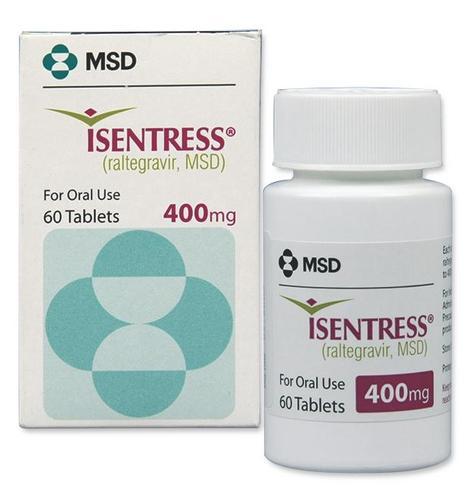
Replace dolutegravir (Tivicay) with raltegravir (Isentress) for post-exposure prophylaxis
Post-exposure prophylaxis (PEP) of patients who may have been exposed to HIV includes a combination HIV nucleoside analog reverse transcriptase inhibitor emtricitabine/tenofovir (Truvada) plus an integrase inhibitor. The CDC initially recommended the integrase inhibitor dolutegravir (Tivicay). However on May 18, 2018, the CDC placed an alert about the neural tube defect risk with dolutegravir.1 How does this change our ED practice? The evidence Based on an interim analysis in an ongoing safety of dolutegraivir, the U.S. Health and Human Services announced: The concern stems from a preliminary unscheduled analysis of an ongoing NIH-funded birth surveillance study in Botswana, which has reported [+]

ALiEMU AIR Peripheral Vascular Disease Module
Welcome to the Peripheral Vascular Disease (PVD) Module! After carefully reviewing all relevant posts from the top 50 sites of the Social Media Index, the ALiEM AIR Team is proud to present the highest quality online content related to PVD emergencies. 2 blog posts within the past 12 months (as of May 2018) met our standard of online excellence and were curated and approved for residency training by the AIR Series Board. We identified 0 AIR and 2 Honorable Mentions. We recommend programs give 1 hour (about 30 minutes per article) of III credit for this module. [+]

Can’t Miss ECG Findings for the Emergency Medicine Provider
Sudden cardiac death accounts for almost 400,000 deaths per year in the United States, and EM providers must be adept at discerning subtle, high-risk ECG findings. With the advent of triage ECG protocols, one of the most common interruptions in the ED is a request to “sign off” on an ECG. We present a reference of some of the most important high-risk ECG findings, intended to help ED providers systematically screen patients in triage and the waiting room. [+]

SplintER Series: Common ED Splint Techniques 104
The SplintER series is back with its fourth installment! In this series, we review splinting fundamentals, introduce advanced concepts, and highlight ways to implement these into your next shift. In this post, we summarize some of the most commonly deployed splints in the ED. Peer-reviewed by sports medicine experts (Dr. Kori Hudson and Dr. Anna Waterbrook), these injury-splint summary tables provide information on the origin, insertion, and positioning for each splint, along with the recommended number of layers of plaster. [+]

ACMT Toxicology Visual Pearls: Snake Bite
Envenomation by the pictured snake would be expected to produce which clinical effects? Bradycardia and hypotension Bruising and epistaxis Difficulty swallowing and muscle weakness Severe swelling and blistering [+]

Director of Growth, Strategic Alliance Initiative, Center for [+]
ALiEM AIR Series: Endocrine Module
Welcome to the Endocrine Module! After carefully reviewing all relevant posts from the top 50 sites of the Social Media Index, the ALiEM AIR Team is proud to present the highest quality online content related to Endocrine emergencies. 8 blog posts within the past 12 months (as of May 2018) met our standard of online excellence and were curated and approved for residency training by the AIR Series Board. We identified 2 AIR and 6 Honorable Mentions. We recommend programs give 3 hours (about 20 minutes per article) of III credit for this module. [+]

PEM Practice Changing Paper: Clinical Trial of Fluid Infusion Rates for Pediatric DKA
Most protocols for managing pediatric patients with diabetic ketoacidosis (DKA) are based on a theoretical association between fluid resuscitation and subsequent neurological decline. Although the evidence for an association between IV fluids and cerebral edema comes from retrospective reviews, for over 20 years, it is an accepted teaching principle of pediatric DKA. Clinical Trial of Fluid Infusion Rates for Pediatric Diabetic Ketoacidosis, published just days ago in the New England Journal of Medicine, challenges this teaching with the first randomized controlled trial designed to investigate the relationship between IV fluids and cerebral edema. We review this publication and present a behind-the-scenes podcast interview [+]
Director of Growth, Strategic Alliance Initiative, Center for Innovation and Digital Health
Massachusetts General Hospital;
Chief Scientific Officer, Conductscience.com
Latest posts by Shuhan He, MD (see all)
- The Discharge Severity Index: Early Research on ED Readmission Risk Assessment - August 14, 2025
- Suboxone and the Emergency Physician: Get Waivered Training - August 12, 2022
- A Tale of Two Epidemics: COVID-19 and the Opioid Crisis - April 23, 2020